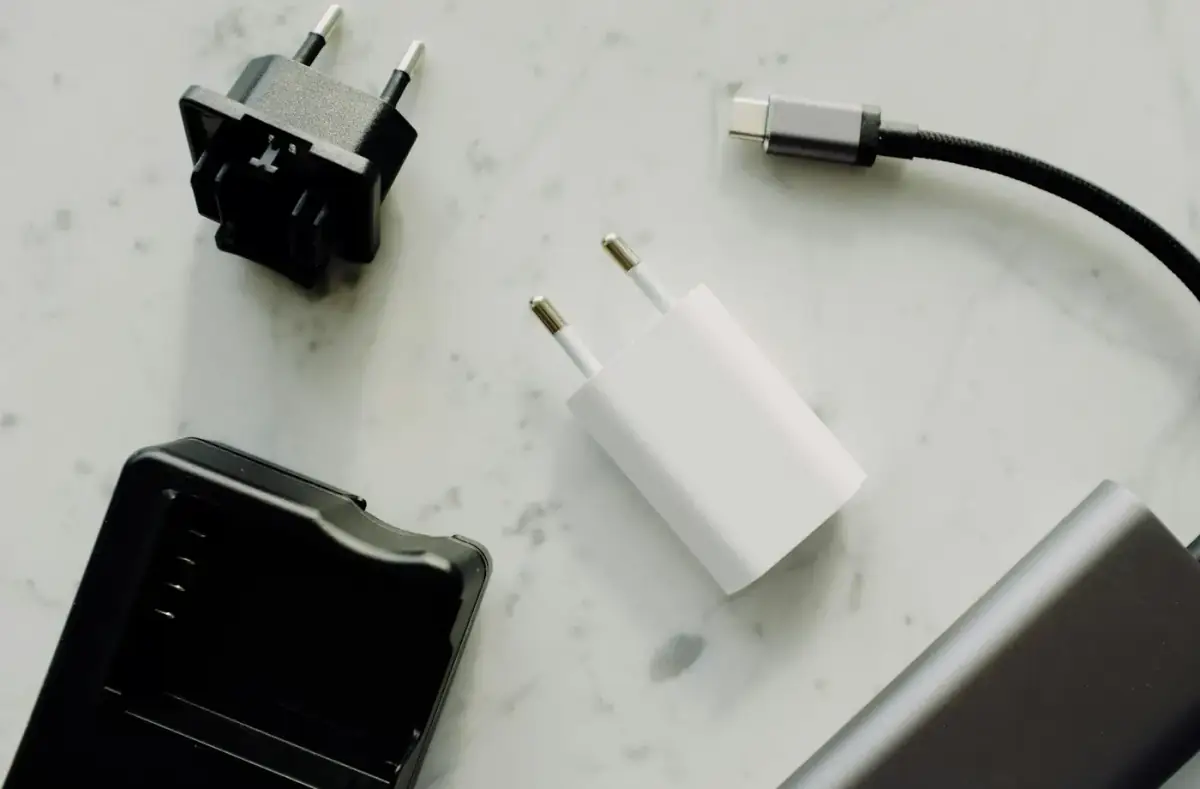
USB-C Cable and Charger Safety Checks
Check USB-C cable and charger safety by looking at wattage, cable rating, heat, loose ports, slow charging, and damaged insulation.
 By NexyFix Gaming DeskGaming PC AnalystPublished Feb 17, 2026Updated Feb 21, 20265 min readIntermediate
Guided repair
USB-C cable and charger safety checks
Use this when a USB-C cable or charger feels loose, hot, slow, unreliable, or confusing. Learn the safe checks before blaming the phone, laptop, or power bank.
Time needed
10-25 minutes
Difficulty
Beginner
Risk level
Low
Applies to
Symptoms
- Charging starts and stops
- Cable feels loose
- Device charges slowly
- Cable or adapter gets warm
- One cable works but another does not
Common causes
- Damaged cable
- Underpowered adapter
- Charge-only cable
- Dirty port
- Loose connector
- Device heat protection
Before you start
Prepare a safe repair session
- Unplug hot or damaged accessories.
- Use a wall outlet for testing.
- Do not use metal tools in ports.
- Stop for swollen battery, heat, burning smell, liquid damage, melted plastic, damaged cable, or a loose charging port.
Quick path
Try the safest checks first
Step 1
Inspect cable and charger condition
Visible damage is enough reason to retire charging gear.
Exact path to follow
- 1Check for fraying, kinks, discoloration, bent plugs, or melted plastic.
- 2Check that the connector seats firmly.
- 3Stop using anything damaged.
- 4Test with a known-good cable.
Expected result
Unsafe accessories are removed from use.
If it worked
Replace the damaged part.
If it did not work
Continue with compatibility checks.
Is the cable or charger damaged or hot?
Yes
Stop using it.
No
Continue to compatibility and port checks.
Step 2
Match charger power to the device type
A phone charger may not power a laptop, and a weak adapter can make charging look broken.
Exact path to follow
- 1Check whether the device is a phone, tablet, handheld, or laptop.
- 2Use the original charger if available.
- 3Use a charger rated for the device class.
- 4Retest without hubs or adapters.
Expected result
The device receives a reasonable power source.
If it worked
Use the matching charger.
If it did not work
Check port fit and heat.
Did the quick path fix the problem?
Yes
Stop here and write down what worked.
No
Continue with the detailed steps below.
Detailed steps
Move one step at a time
Step 3
Test one cable and one charger at a time
Changing both at once hides whether the cable or adapter was the cause.
Exact path to follow
- 1Test known-good cable with original adapter.
- 2Test original cable with known-good adapter.
- 3Use the same outlet.
- 4Write down which pair works.
Expected result
The weak part is identified.
If it worked
Retire the failing part.
If it did not work
Check device port only after accessory tests.
Step 4
Check the device port gently
Lint or port damage can make a good cable act bad.
Exact path to follow
- 1Power off if practical.
- 2Look inside the port with a light.
- 3Do not scrape with metal.
- 4Stop if the port is loose, bent, wet, or damaged.
Expected result
Port obstruction or damage is safely identified.
If it worked
Use service if damaged.
If it did not work
Continue normal charging if clear.
Step 5
Watch heat during the first 15 minutes
Heat can reveal mismatch, blocked airflow, or battery protection.
Exact path to follow
- 1Charge on a hard surface.
- 2Avoid pillows, blankets, or direct sun.
- 3Check cable, adapter, and device after 10-15 minutes.
- 4Stop if anything gets hot.
Expected result
Charging stays cool and stable or the unsafe part is identified.
If it worked
Keep the safe combination.
If it did not work
Retire the accessory or seek service.
Advanced checks
Use only after the safe path
Step 6
Do not chase maximum wattage blindly
Devices draw only what they support, and unsafe accessories are not worth faster charging.
Exact path to follow
- 1Use chargers from reputable sources.
- 2Avoid unlabeled or damaged adapters.
- 3Do not use a higher-watt charger to force a broken device to charge.
- 4Prioritize stable, cool charging.
Expected result
Charging choices become compatibility-based, not guesswork.
If it worked
Use the safe charger.
If it did not work
Ask support if the device rejects known-good gear.
Stop here
Stop for unsafe USB-C symptoms
USB-C is convenient, but heat, damage, and loose ports are stop signs.
- Stop for heat, smell, swelling, or liquid.
- Stop if the port is loose.
- Stop before opening the device.
Mistakes to avoid
- Do not keep using frayed cables.
- Do not scrape ports with metal.
- Do not assume all USB-C cables support the same power or data.
- Do not charge hot devices under fabric.
When to ask a technician
- Port is loose or bent.
- Device heats with known-good gear.
- Battery swelling appears.
- Liquid damage or burning smell appears.
Guided repair FAQ
Are all USB-C cables the same?
No. Some support more power or data than others, and some are damaged or charge-only.
Can I use a laptop charger on a phone?
Often a quality USB-C charger negotiates power safely, but the cable, charger, and phone must all be in good condition. Stop for heat or warning signs.
Should I use a random tool to fix USB-C charging?
No. Start with built-in settings, official support paths, reversible checks, and known-good cables or accessories. Unknown repair tools often add risk without proving the cause.
What is the safest way to test?
Change one thing, test the same symptom, and stop when the problem is fixed. Avoid stacking several changes because you will not know what helped.
Related guides
Was this helpful?
Your feedback helps NexyFix improve future repair guides and beginner explanations.

NexyFix Gaming Desk
View author profileGaming PC Analyst
A role-based NexyFix editorial profile for frame pacing, game stability, PC thermals, driver behavior, and realistic performance tuning.
Related articles
Phone ChargingHow to Fix iPhone Charger Port Not Working: Safe Checks FirstiPhone charger port not working? Try safe checks for lint, cable problems, adapter issues, moisture warnings, loose charging, and when to get repair help.Phone ChargingiPhone Charger Cable Not Working: Safe Charging ChecksIf your iPhone charger cable is not working, check the cable, adapter, outlet, charging port, temperature, and backup options before replacing parts.