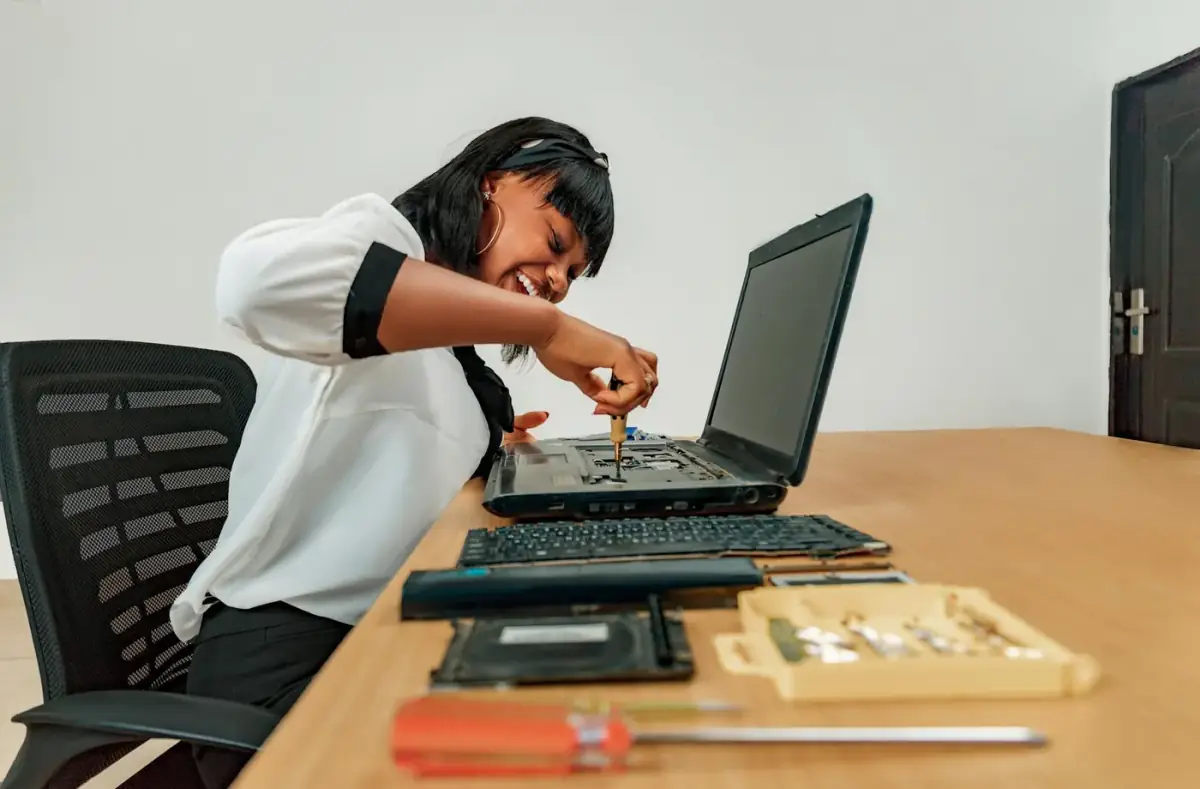
Slow Laptop or PC Fix: What to Check Before Reinstalling Windows
A practical slow laptop checklist that checks startup apps, storage space, heat, updates, and hardware clues before reinstalling Windows.
 By NexyFix Mobile and Laptop DeskPhone and Laptop Help EditorPublished May 3, 2026Updated May 5, 202610 min readBeginnerUpdated recentlyBeginner friendly
Guided repair
Laptop or PC is slow before reinstalling Windows
Use this path before reinstalling Windows. Slow performance often comes from startup apps, low storage, updates, heat, weak memory headroom, or a failing drive.
Time needed
20-50 minutes
Difficulty
Beginner
Risk level
Low
Applies to
Symptoms
- Slow startup
- Apps open slowly
- Disk at high usage
- Lag after updates
- Laptop gets hot and slows down
Common causes
- Too many startup apps
- Low storage
- Background updates
- Heat
- Malware or unwanted apps
- Failing storage
- Low RAM headroom
Before you start
Prepare a safe repair session
- Back up important files before reset, reinstall, partition, firmware, or storage repair steps.
- Restart once before judging performance.
- Do not reinstall until you know files are backed up.
- Do not use fake driver updater, repair, optimizer, or registry-cleaner tools.
Quick path
Try the safest checks first
Step 1
Disable unnecessary startup apps
Startup load can make a healthy PC feel broken.
Exact path to follow
- 1Open Startup Apps.
- 2Disable apps you recognize and do not need at startup.
- 3Leave security, driver, and unknown items alone.
- 4Restart and test.
Expected result
The desktop becomes usable faster after restart.
If it worked
Keep the changes.
If it did not work
Check storage and update state.
Step 2
Check storage and Windows Update
Low free space and active updates can slow the whole system.
Exact path to follow
- 1Open Storage settings.
- 2Free obvious temporary files.
- 3Open Windows Update.
- 4Let pending updates finish before deeper fixes.
Expected result
You know whether space or updates are causing the slowdown.
If it worked
Stop after restart and retest.
If it did not work
Check heat and system files.
Did the quick path fix the problem?
Yes
Stop here and write down what worked.
No
Continue with the detailed steps below.
Detailed steps
Move one step at a time
Step 3
Check heat and surface
A laptop can slow down to protect itself when airflow is blocked.
Exact path to follow
- 1Move laptops to a hard surface.
- 2Check vents.
- 3Listen for fan behavior.
- 4Retest after the laptop cools.
Expected result
Performance improves if heat was limiting the system.
If it worked
Use the overheating guide.
If it did not work
Continue to system file checks only if Windows behaves oddly.
Step 4
Run DISM and SFC if Windows feels damaged
System file checks may help when slowness follows failed updates or Windows errors.
Exact path to follow
- 1Open Terminal as administrator.
- 2Run DISM.
- 3Restart if requested.
- 4Run SFC and restart again.
Repair the Windows component store
Checks the online Windows image and repairs component-store corruption that can affect updates and system repair.
Run this only in an administrator terminal after safe checks. Commands are copy-only. NexyFix never runs commands automatically.
DISM /Online /Cleanup-Image /RestoreHealthScan protected Windows system files
Checks protected Windows files and attempts to replace damaged copies with known-good versions.
Run this only in an administrator terminal and let it finish. Commands are copy-only. NexyFix never runs commands automatically.
sfc /scannowExpected result
Windows repairs component or system file damage if present.
If it worked
Retest normal use.
If it did not work
Check storage health clues.
Step 5
Look for storage failure clues
A failing drive can make Windows painfully slow and reinstalling onto it may not help.
Exact path to follow
- 1Listen for clicking on hard drives.
- 2Watch for disappearing files or drives.
- 3Notice repeated file errors.
- 4Back up important files immediately if these appear.
Expected result
You know whether the slowdown might be hardware.
If it worked
Back up and plan storage diagnosis.
If it did not work
Consider whether RAM, old CPU, or app load is the limit.
Advanced checks
Use only after the safe path
Step 6
Decide whether reinstalling is actually useful
Reinstalling can help software clutter, but it does not fix heat, weak hardware, or failing storage.
Exact path to follow
- 1Confirm backup.
- 2List what problem remains.
- 3Check whether slow behavior appears before login or only after apps load.
- 4Use the Windows USB guide only after safe checks.
Expected result
You avoid a reinstall that does not address the cause.
If it worked
Use install guide if reinstall is still the right move.
If it did not work
Ask for diagnosis before wiping the PC.
Stop here
Stop before reinstalling
A reinstall is a data-risk step and may not fix hardware limits.
- Stop if files are not backed up.
- Stop if storage may be failing.
- Stop if heat or shutdowns continue.
Mistakes to avoid
- Do not reinstall before backup.
- Do not delete system folders to free space.
- Do not install optimizer tools.
When to ask a technician
- Drive clicks or disappears.
- Laptop overheats after cleaning basics.
- The PC shuts down or freezes during backups.
Guided repair FAQ
Will reinstalling Windows make an old PC fast?
It can help software clutter, but it will not fix low RAM, old storage, overheating, or failing hardware.
Should I use a PC optimizer?
No. Use built-in settings, remove apps you recognize, and check heat and storage first.
Why does NexyFix avoid one-click repair tools here?
They usually hide what changed. This guide keeps each repair step visible, reversible, and tied to the symptom you actually see.
What note should I keep while testing?
Write down the exact error, device name, setting, cable, update, or hardware clue that changed the symptom. That note helps choose the next narrow guide.
Related guides
Was this helpful?
Your feedback helps NexyFix improve future repair guides and beginner explanations.

NexyFix Mobile and Laptop Desk
View author profilePhone and Laptop Help Editor
A role-based NexyFix editorial profile for beginner-friendly phone, charging, Bluetooth, storage, and laptop maintenance explanations with safety notes first.
Related articles
 PC Windows FixesWindows 11 Not Booting: Safe Startup Repair ChecklistA beginner-safe startup checklist for a Windows 11 PC that powers on but cannot reach the desktop.
 PC Windows FixesWindows Update Stuck or Failing: Safe Fixes to TryA safe path for Windows Update that starts with restart, storage, network, and built-in settings checks before deeper repair commands.
 PC Windows FixesPC Turns On But No Display: Safe ChecksFix a PC that turns on but has no display with monitor, HDMI/DisplayPort, GPU port, RAM, debug-light, and safe stop checks.