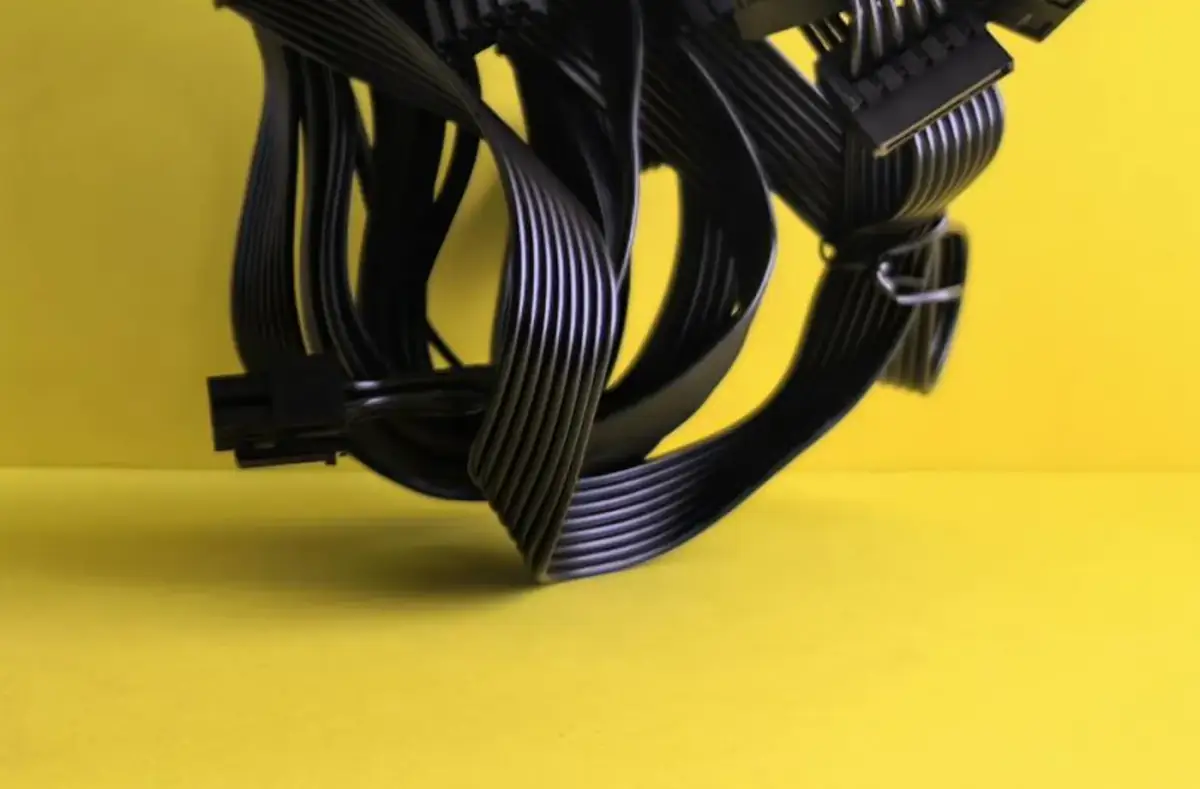
PC Will Not Turn On: Safe First Checks
A beginner-safe desktop power checklist for no lights, no fans, no response, or a PC that only clicks once.
 By NexyFix Hardware and Boot DeskBoot and Hardware Education EditorPublished May 6, 2026Updated May 6, 20269 min readBeginnerUpdated recentlyBeginner friendly
Guided repair
PC will not turn on
Use this when a desktop gives no lights, no fans, no display, or only a click when the power button is pressed. Stay outside dangerous power-supply work and prove the simple power path first.
Time needed
10-30 minutes
Difficulty
Beginner
Risk level
Medium
Applies to
Symptoms
- No fan spin or lights
- One click then silence
- Power button does nothing
- PC worked before moving or cleaning
Common causes
- Dead outlet
- Loose power cable
- Rear PSU switch off
- Failed power strip
- Case power-button issue
- Power supply or motherboard fault
Before you start
Prepare a safe repair session
- Use a known-good wall outlet.
- Remove nonessential USB devices.
- Change one thing at a time, then test the same symptom before moving on.
- Do not open power supplies, swollen batteries, or hardware that shows heat, liquid damage, sparks, or burning smell.
Quick path
Try the safest checks first
Step 1
Prove the outlet and power cable first
A dead strip, loose wall plug, or bad cable can look exactly like a dead PC.
Exact path to follow
- 1Plug a lamp or charger into the same outlet.
- 2Connect the PC power cable directly to the wall for one test.
- 3Seat the cable firmly at the PSU.
- 4Try a known-good cable if available.
Expected result
You know wall power and the cable are not the easy failure point.
If it worked
Stop if the PC starts normally.
If it did not work
Check the rear PSU switch and visible standby lights.
Did the PC show any lights or fan movement after the outlet and cable test?
Yes
Continue with normal startup and reconnect devices one at a time.
No
Move to PSU switch, case button, and stop-point checks.
Step 2
Check the rear PSU switch and standby signs
Many desktop power supplies have a rear switch, and some boards show standby LEDs even before startup.
Exact path to follow
- 1Look for the rear I/O power switch on the PSU.
- 2Set it to the on position.
- 3Wait 10 seconds.
- 4Look for motherboard, GPU, or case standby lights without opening risky power parts.
Expected result
The PC either reacts or remains completely dead.
If it worked
Stop and test normal boot.
If it did not work
Continue only with safe external checks.
Did the quick path fix the problem?
Yes
Stop here and write down what worked.
No
Continue with the detailed steps below.
Detailed steps
Move one step at a time
Step 3
Disconnect extra devices and retry
A shorted USB device or stuck accessory can sometimes block startup.
Exact path to follow
- 1Power off and unplug.
- 2Remove external drives, hubs, controllers, printers, and nonessential USB devices.
- 3Reconnect power only.
- 4Press the power button once.
Expected result
The PC either starts or stays silent with fewer variables.
If it worked
Reconnect devices one at a time to find the offender.
If it did not work
Check the power button behavior and recent hardware changes.
Step 4
Check recent movement or cleaning clues
A PC that fails after being moved may have a loose external cable or internal connector, but beginners should not jump into deep hardware work.
Exact path to follow
- 1Confirm the monitor is not the only device off.
- 2Look for loose external cables.
- 3If you recently opened the case and are comfortable, check only clearly visible main power connectors with the PC unplugged.
- 4Stop if you are unsure.
Expected result
Obvious loose-cable causes are found or ruled out.
If it worked
Close the case, reconnect power, and test once.
If it did not work
Treat the issue as hardware diagnosis rather than repeated power-button attempts.
Advanced checks
Use only after the safe path
Step 5
Decide whether this needs hardware service
No-response power faults can involve PSU, motherboard, case wiring, or front-panel switches.
Exact path to follow
- 1Write down what reacted and what did not.
- 2Note any click, smell, light, or repeated attempt pattern.
- 3Stop testing if power symptoms repeat.
- 4Ask a technician or experienced builder to diagnose power hardware.
Expected result
You avoid unsafe power troubleshooting and have useful notes for repair.
If it worked
Use the notes to explain the symptom clearly.
If it did not work
Do not continue power testing without qualified help.
Stop here
Stop before unsafe power work
A desktop with no power can involve mains electricity and charged PSU components.
- Burning smell, sparks, swollen battery, liquid damage, clicking storage, or repeated shutdowns.
- A step requires opening hardware you are not comfortable opening.
- Important data is not backed up before storage, reset, or reinstall work.
Mistakes to avoid
- Do not open a power supply.
- Do not keep pressing power after smell or sparks.
- Do not mix modular PSU cables from another unit.
- Do not use random driver updater, optimizer, cleaner, BIOS, or repair tools.
When to ask a technician
- No standby lights after known-good outlet and cable.
- Repeated clicking or instant shutoff.
- Burning smell, buzzing, sparks, or liquid damage.
- Recent PSU, motherboard, or power-button wiring changes.
Guided repair FAQ
Does no fan spin always mean the PSU is dead?
No. Wall power, power strips, cables, rear switches, case buttons, and motherboard faults can all look similar.
Can I safely test the PSU myself?
Beginner checks should stay outside the PSU. Opening it is unsafe even when unplugged.
Should I use a one-click repair tool for a desktop that will not turn on?
No. Start with built-in settings, official support paths, careful observation, and reversible changes. Unknown repair tools can add new problems.
What is the safest way to test the fix?
Change one thing, test the same symptom, and stop when the problem is fixed. If the next step risks data, firmware, battery, power, or storage, pause first.
Related guides
Was this helpful?
Your feedback helps NexyFix improve future repair guides and beginner explanations.
NexyFix Hardware and Boot Desk
View author profileBoot and Hardware Education Editor
A role-based NexyFix editorial profile for storage compatibility, boot behavior, error codes, and when hardware symptoms need professional help.
Related articles
 PC Windows FixesPC Turns On But No Display: Safe ChecksFix a PC that turns on but has no display with monitor, HDMI/DisplayPort, GPU port, RAM, debug-light, and safe stop checks.PC Windows FixesPower Supply Warning Signs Beginners Should Not IgnoreLearn the power-supply symptoms that should make you stop testing and ask for qualified help.
 PC Windows FixesWindows 11 WiFi Connected But No Internet FixesFix Windows 11 WiFi connected but no internet with router checks, DNS, VPN/proxy, adapter, driver, and safe reset steps.