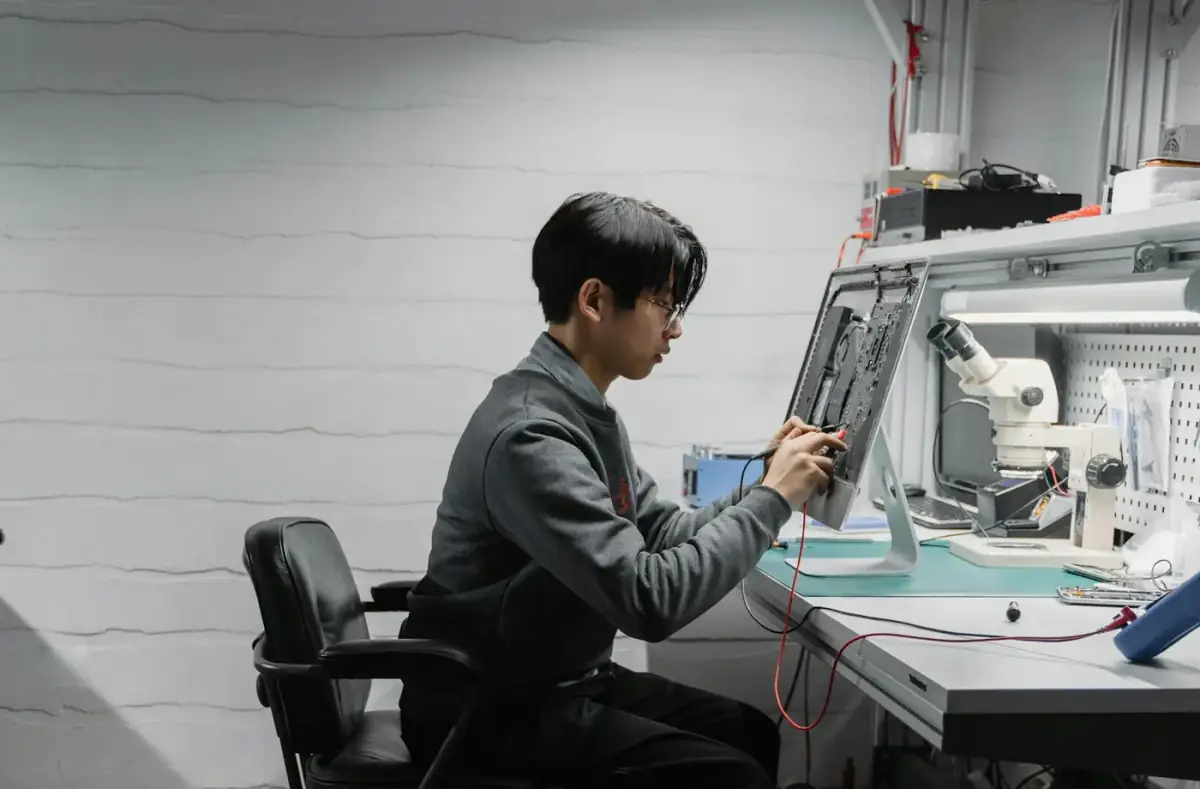
Check GPU Temperatures While Gaming
A safe beginner guide to GPU temperature symptoms, airflow checks, fan behavior, dust, and when heat becomes a stop point.
 By NexyFix Gaming DeskGaming PC AnalystPublished May 6, 2026Updated May 6, 20269 min readBeginnerUpdated recentlyBeginner friendly
Guided repair
Check GPU temperatures while gaming
Use this when FPS drops, fans get loud, or games crash after a few minutes. The guide focuses on safe observation, airflow, dust, fan behavior, and clear stop points.
Time needed
15-45 minutes
Difficulty
Beginner
Risk level
Medium
Applies to
Symptoms
- FPS drops after several minutes
- Fans ramp loudly
- Game crashes in heavy scenes
- Laptop or case feels hot
Common causes
- Blocked airflow
- Dust
- High graphics settings
- Hot room
- Fan curve behavior
- Aging thermal material
- Failing fan
Before you start
Prepare a safe repair session
- Test on a hard open surface.
- Do not open hot hardware.
- Avoid overclocking while diagnosing heat.
- Change one thing at a time, then test the same symptom before moving on.
Quick path
Try the safest checks first
Step 1
Check whether heat matches the timing
Thermal problems usually appear after load builds, not instantly at the desktop.
Exact path to follow
- 1Start the game from cool idle.
- 2Play the same scene for 10-15 minutes.
- 3Note when FPS drops or fan noise changes.
- 4Stop if the device gets extremely hot or shuts down.
Expected result
The symptom timing is tied to heat or ruled out.
If it worked
Move to airflow and settings checks.
If it did not work
Use driver or crash guides.
Does performance drop after heat builds?
Yes
Check airflow, fan behavior, dust, and heat-heavy settings.
No
Check drivers, overlays, storage, or game files.
Step 2
Improve airflow without opening risky parts
Simple airflow improvements can reduce heat without firmware or hardware changes.
Exact path to follow
- 1Move the PC away from walls and fabric.
- 2Use a hard surface for laptops.
- 3Make sure vents are not blocked.
- 4Remove dust from external vents gently.
Expected result
Temperatures and fan noise improve or stay the same.
If it worked
Keep the airflow change.
If it did not work
Lower heat-heavy settings for one test.
Did the quick path fix the problem?
Yes
Stop here and write down what worked.
No
Continue with the detailed steps below.
Detailed steps
Move one step at a time
Step 3
Lower heat-heavy graphics settings
Ray tracing, high resolution, shadows, and uncapped FPS can increase GPU heat.
Exact path to follow
- 1Cap FPS to a sensible target.
- 2Lower ray tracing or shadows for one test.
- 3Keep one change at a time.
- 4Test the same scene.
Expected result
Heat and fan load reduce if settings were the trigger.
If it worked
Keep the stable profile.
If it did not work
Check fan behavior and driver timing.
Step 4
Watch fan behavior and physical stop signs
Grinding, no fan movement, swelling, or shutdowns are not normal tuning problems.
Exact path to follow
- 1Listen for grinding or scraping.
- 2Look for visible fan spin if safe and visible.
- 3Stop for shutdowns, swelling, smell, or liquid damage.
- 4Do not open a laptop or GPU without service instructions.
Expected result
Hardware danger signs are not ignored.
If it worked
Ask for service instead of more load testing.
If it did not work
Use driver or bottleneck guides for non-thermal symptoms.
Advanced checks
Use only after the safe path
Step 5
Plan cleaning or service only when needed
Internal cleaning, repaste, or fan replacement can help but requires model-specific care.
Exact path to follow
- 1Check warranty and service manual availability.
- 2Use proper tools only if you know the device.
- 3Avoid battery puncture and fragile fan cables.
- 4Ask a technician for compact laptops or GPUs.
Expected result
Internal work is planned safely instead of improvised.
If it worked
Proceed only with proper instructions.
If it did not work
Use professional service.
Stop here
Stop for heat danger signs
Thermal troubleshooting should reduce risk, not push hardware harder.
- Burning smell, sparks, swollen battery, liquid damage, clicking storage, or repeated shutdowns.
- A step requires opening hardware you are not comfortable opening.
- Important data is not backed up before storage, reset, or reinstall work.
Mistakes to avoid
- Do not ignore heat shutdowns.
- Do not disable fans or thermal limits.
- Do not open hot devices.
- Do not judge thermals while vents are blocked.
When to ask a technician
- Grinding fan.
- Repeated heat shutdowns.
- Swollen battery or liquid damage.
- GPU fan not spinning under load.
Guided repair FAQ
Are loud fans always bad?
No. Loud fans can be normal under load. Grinding, shutdowns, or heat at idle are different clues.
Can lowering settings fix heat?
It may help by reducing GPU load. If the device still overheats at low load, check airflow or service needs.
Should I use a one-click repair tool for GPU temperatures?
No. Start with built-in settings, official support paths, careful observation, and reversible changes. Unknown repair tools can add new problems.
What is the safest way to test the fix?
Change one thing, test the same symptom, and stop when the problem is fixed. If the next step risks data, firmware, battery, power, or storage, pause first.
Related guides
Was this helpful?
Your feedback helps NexyFix improve future repair guides and beginner explanations.

NexyFix Gaming Desk
View author profileGaming PC Analyst
A role-based NexyFix editorial profile for frame pacing, game stability, PC thermals, driver behavior, and realistic performance tuning.
Related articles
 Gaming PC OptimizationLaptop Overheating While Gaming: Safe Checks FirstA laptop overheating guide that starts with airflow, surfaces, background load, fan behavior, power settings, and safe stop points.
 FPS BoostFix Stuttering When FPS Looks HighFind frame pacing, shader compilation, storage, VRAM, overlay, and background-load causes when the FPS counter looks fine.
 PC Windows FixesDesktop PC Randomly Shuts Down: Safe ChecklistSeparate heat, power, wall outlet, driver, and storage clues before assuming a major desktop part has failed.